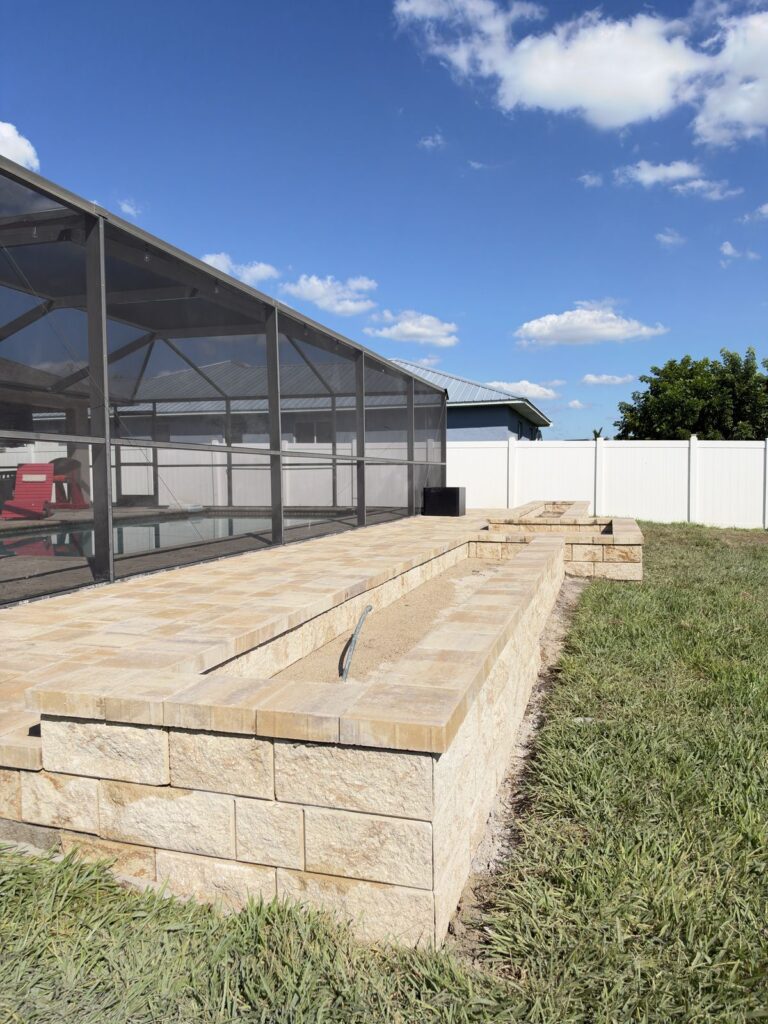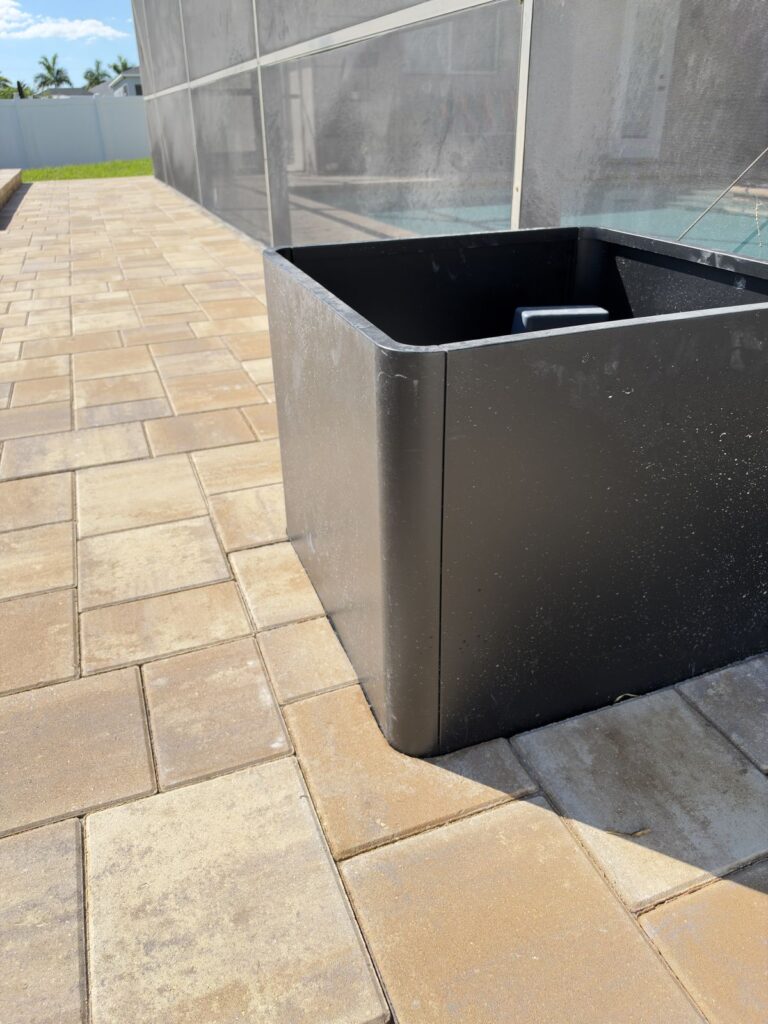

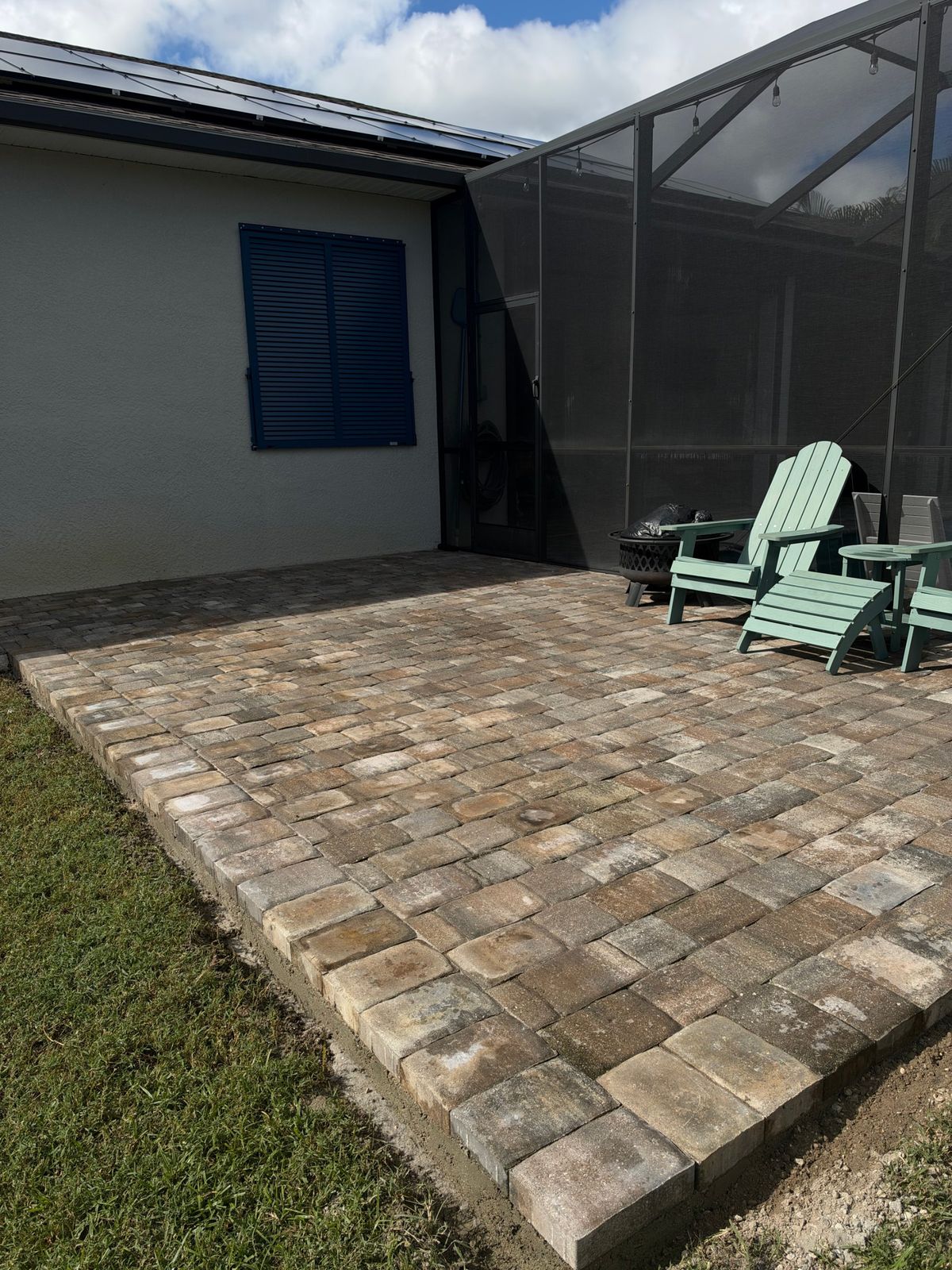
Sealing is one of the most common questions we get after a paver install. Southwest Florida is hard on outdoor surfaces: strong sun, high humidity, heavy summer rain, salt air near the coast and pool chemicals all work on your pavers every day. A good sealer protects your investment, but timing and product choice matter. Here is how we approach it for homeowners from Sarasota to Naples.
Why Seal Pavers in Florida?
- UV protection. Florida sun fades paver color over time. Sealer slows that down.
- Mold, mildew and algae. Humidity and shade lead to dark growth, especially on pool decks and north-facing walkways. Sealed pavers are easier to keep clean.
- Stain resistance. Oil drips on driveways, rust from irrigation water, leaves and grill grease soak into unsealed pavers.
- Joint stabilization. Sealer helps lock in joint sand so it does not wash out in storms, which also means fewer weeds and ant hills.
When to Seal New Pavers
Do not rush it. New concrete pavers often show a white haze called efflorescence as natural salts work to the surface. Sealing too early can trap that haze under the sealer. We usually recommend waiting until efflorescence has run its course, which can take several weeks to a few months, then cleaning and sealing.
How Often Should You Reseal?
For most Southwest Florida homes, resealing every two to three years is a good rule of thumb. Driveways with heavy traffic, pool decks exposed to chlorine or salt systems, and homes close to the Gulf may need it sooner. Shaded areas that stay damp can also wear faster.
Signs it is time to reseal
- Water soaks in instead of beading on the surface
- Colors look dull or washed out
- Joint sand is washing out or weeds are coming through
- Stains are harder to clean than they used to be
Choosing the Right Sealer
Sealers come in two main looks. A wet look finish deepens color and adds sheen, which many homeowners like on driveways. A natural or matte finish protects without changing the look much. Around pools we generally recommend a non-slick, matte product so the surface stays safe barefoot. Water-based and solvent-based sealers each have tradeoffs in durability, odor and how they handle humidity, so the right pick depends on your pavers and where they are.
What a Proper Sealing Job Includes
- Deep cleaning to remove dirt, mildew and stains
- Treating or replacing badly stained or cracked pavers
- Re-sanding joints, often with polymeric sand
- Letting everything dry fully
- Applying sealer evenly in the right weather window
Skipping the cleaning and drying steps is the most common reason sealer turns cloudy or peels in Florida humidity.
Need Your Pavers Cleaned or Sealed?
NexElite Pavers & Landscaping installs and maintains pavers across Southwest Florida, including paver driveways and paver pool decks. Call (941) 941-8814 or request a free estimate and we will tell you exactly what your pavers need.